
Why Swiss CNC Machining Is the Standard for High-Precision Parts
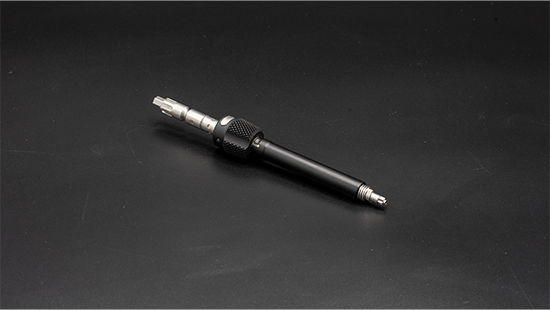
Modern manufacturing demands incredible accuracy. As industries like aerospace, medical, and defense evolve, components are becoming smaller and more complex. Manufacturers face the challenge of producing these intricate parts quickly without sacrificing quality. This is where Swiss CNC machining becomes the ultimate solution. Unlike conventional turning centers, this technology offers a unique approach to material removal that ensures distinct advantages. At High Tech Quality Manufacturing, we utilize this advanced method to deliver components that meet the strictest specifications.
What Is Swiss CNC Machining?
Swiss machining was originally developed for the watchmaking industry in Switzerland. The goal was to create tiny screws and shafts with extreme precision. Today, that same concept applies to a vast array of industrial applications. The primary difference lies in how the machine handles the workpiece. In a traditional lathe, the part is held in a chuck and extends out, which can lead to deflection if the part is long and thin. However, a Swiss machine operates with a sliding headstock and a guide bushing. This configuration changes the physics of the cutting process, allowing for superior stability and repeatability.
The Role of the Guide Bushing
The defining feature of this technology is the guide bushing. In this setup, the bar stock slides through the bushing, and the cutting tools interact with the material right next to this support point. Because the cutting happens so close to the guide bushing, the material does not have the chance to bend or deflect away from the tool force. This rigidity is the secret behind the incredibly tight tolerances that Swiss CNC machining can achieve. It allows manufacturers to hold dimensions within ten-thousandths of an inch, ensuring that every single part in a production run is identical to the last.
Handling Complex Geometries
Another major advantage is the ability to machine complex geometries in a single setup. Many modern Swiss machines are equipped with live tooling, which means they can perform milling, drilling, and tapping operations while the part is still in the machine. This multi-axis capability allows for the creation of intricate features like cross-holes, flats, and slots without needing to move the part to a separate milling machine. By consolidating these operations, you significantly reduce the risk of operator error associated with moving parts between machines.
Speed and Efficiency
Cycle time is a critical factor in manufacturing costs, and this process excels at speed. Because the machines are designed for rigidity and often have multiple tools cutting simultaneously, material removal rates are high. The sliding headstock motion allows for continuous feeding of bar stock, making it an ideal process for high-volume production runs. Once the machine is set up and programmed, it can run unattended for long periods, churning out thousands of parts with minimal human intervention. This efficiency translates directly to lower per-part costs for the customer.
Eliminating Secondary Operations
The precision of Swiss CNC machining often eliminates the need for secondary finishing operations. Conventional machining might leave burrs or require grinding to hit the final diameter. However, the superior surface finish achievable with Swiss-style turning means parts often come off the machine ready for assembly. This "done-in-one" capability streamlines the supply chain. It reduces the lead time for projects and simplifies quality control, as there are fewer variables to manage when secondary processing is removed from the equation.
Ideal for Small, Long Parts
While this technology is powerful, it is specifically the champion of small, long, and slender parts. In traditional turning, turning a long, thin shaft is a nightmare due to the "whipping" effect of the material spinning at high speeds. The support provided by the guide bushing completely negates this issue. This makes the process the industry standard for creating pins, needles, shafts, and other delicate components found in medical devices and electronic equipment. If your design calls for a length-to-diameter ratio that seems impossible for a standard lathe, this is the manufacturing method required.
Swiss CNC Machining at High Tech Quality Manufacturing
When your project demands the highest level of accuracy, you need a partner equipped with the right technology and expertise. At High Tech Quality Manufacturing, our Swiss CNC machining capabilities allow us to produce complex, high-precision parts that meet your exact needs. Whether you are in the medical, aerospace, or industrial sector, we have the tools to handle your most challenging designs.
We are committed to delivering quality components that drive your business forward. Contact us today to discuss your next project.